The Welcome Center Görlitz visited Rabryka on April 9, 2026, and got to know a place that shows how arrival, participation and networking can work in practice.
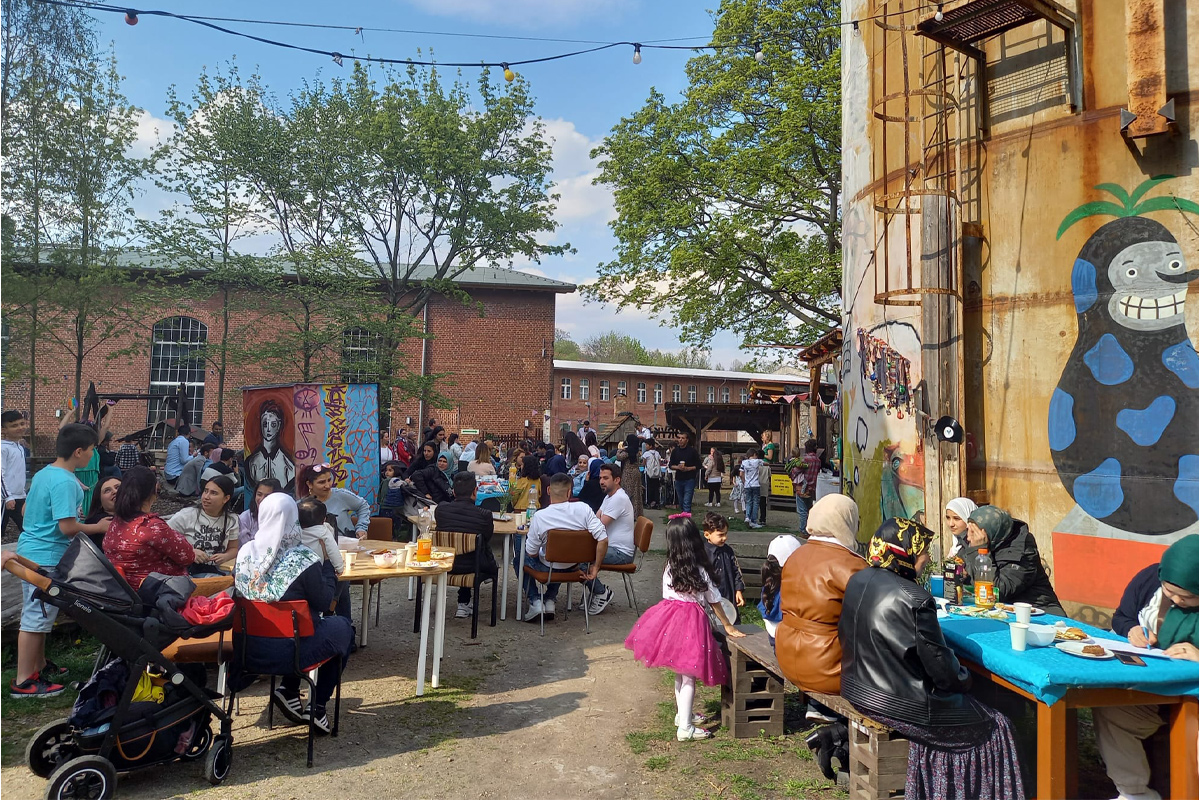
Rabryka sees itself as an open center for youth and socio-cultural activities – a space for experimentation, participation, and encounters. For newcomers, especially international professionals, it offers an accessible way to make connections and find their way around the local community. Access is intentionally kept simple: many activities can be attended without registration, fostering encounters naturally "through doing and creating.".
The range of activities is broad: from open workshops (maker spaces), creative formats, and game nights to everyday meeting places like the "Kitchen for All" (Küfa), the garden café, or bar nights. This is complemented by workshops and cultural and social events such as the quiz lab, which is occasionally held in English. This diversity appeals to different interests and brings together people from a wide variety of backgrounds.
An important component is the international women's café in the "Frauenland" project, which offers a safe space for exchange, especially for migrant women. Connections are also formed through shared interests – regardless of language or origin – through gardening together in the community garden of the environmental education project "Zusammen.wachsen" (Growing Together), cooking in the international women's café, or for the community kitchen.
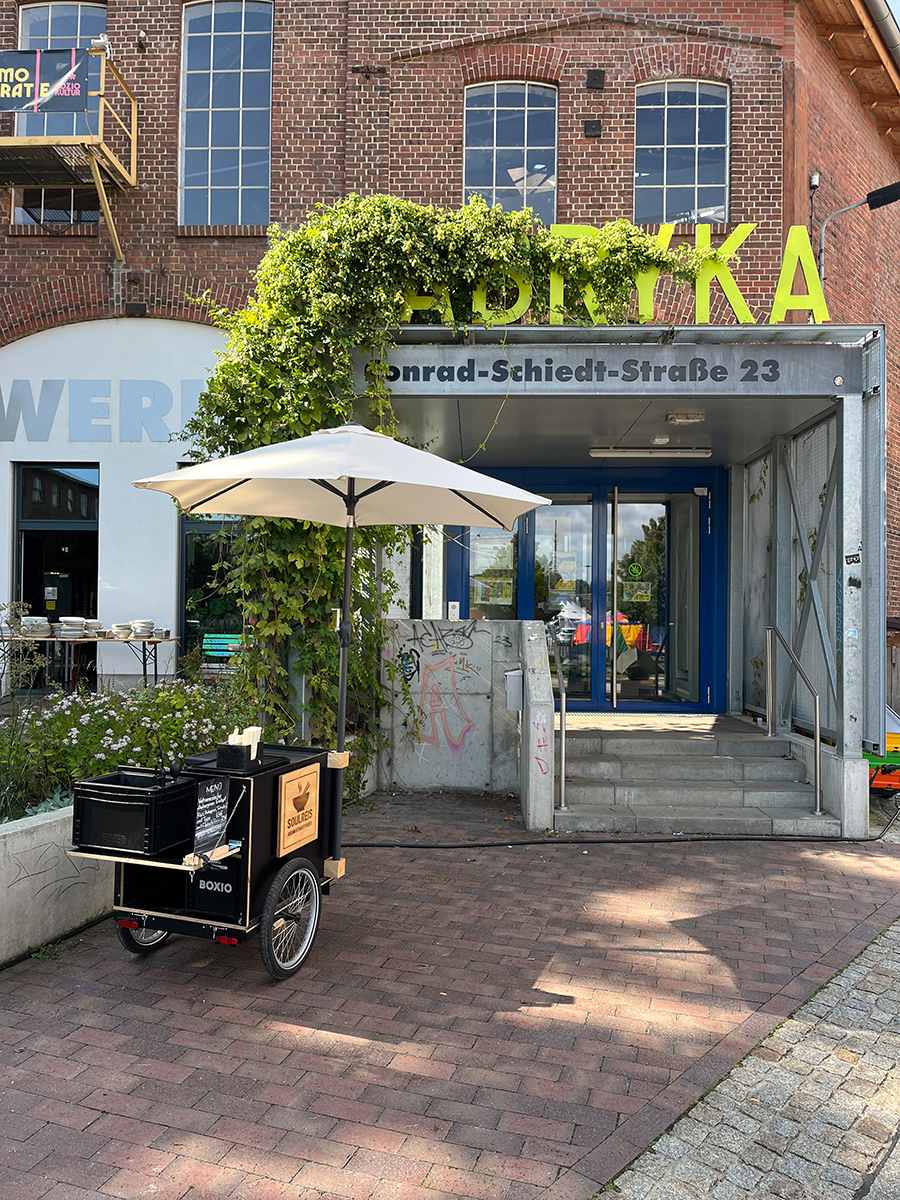
A particularly successful example is the story of Thang Trinh: As an international expert, he came to the Rabryka through the garden project, contributed his design skills, and eventually developed his own ideas – today he runs his own mobile cooking stand, "SoulReis". Such developments demonstrate the potential inherent in open meeting places.
For skilled workers from Germany and abroad, the emerging networks offer particular added value: In cooperation with regional partners, the Welcome Team, and companies, targeted opportunities for interaction are created. This allows not only for social contacts to develop, but also for bridges to the job market.
The conversation makes it clear what challenges many immigrants face – such as a lack of language practice, complex bureaucratic processes, or uncertainties within the education and childcare system. Rabryka offers guidance, informal support, and above all, a place where participation is immediately possible.
From the county's perspective, it is therefore an important building block of functioning welcome structures: a social anchor point that makes integration tangible, open and communal, and accessible in everyday life.